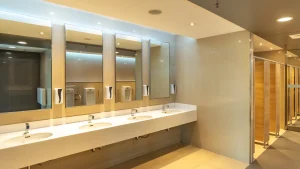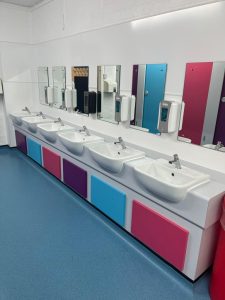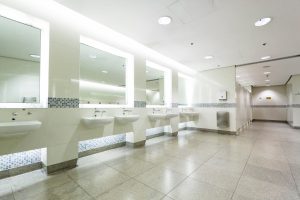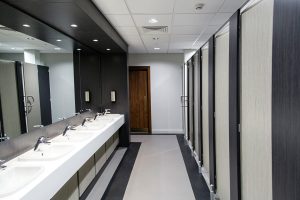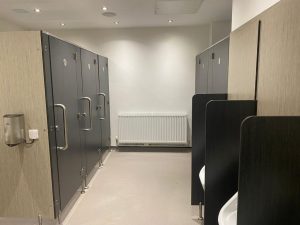


A commercial washroom can look clean, modern and well planned on day one, but its real test comes after months of regular use. Doors are opened hundreds of times, locks are turned by hurried users, panels take knocks from bags and cleaning equipment, and fixings quietly carry the strain.
That is why cubicle hardware deserves more attention than it often gets. The right hinges, locks, fixings and partition specification can make the difference between a washroom that feels dependable every day and one that needs constant attention.
Why hardware matters as much as the panel choice
When facilities teams compare cubicle systems, the first questions often focus on colour, layout, privacy and panel material. Those are all important, but the hardware is what turns the specification into a reliable working installation.
Every cubicle door depends on a small group of components working together. Hinges hold the door in line. Locks give users privacy and reassurance. Headrails, brackets, feet and wall fixings keep the structure stable. Handles, indicator bolts and emergency release features all need to feel intuitive and robust.
If one of these components is underspecified, the whole cubicle can start to feel tired before the panels themselves are anywhere near the end of their useful life. A strong panel with poor hinges may still sag. A smart looking door with a weak lock can frustrate users. A row of cubicles with insecure fixings can develop movement, noise and alignment problems.
Good hardware selection is not about choosing the most complicated option. It is about matching the level of use, user behaviour, environment and required finish. A commercial washroom in a busy building needs hardware that can cope with repetition, occasional misuse and regular inspection without becoming loose, stiff or unreliable.
For buyers comparing commercial cubicle systems, it helps to treat hardware as part of the core performance specification, not a finishing detail left until the end.
Hinges and door movement are central to reliability

Hinges carry one of the hardest jobs in a cubicle system. They support the weight of the door, control its movement and help keep gaps consistent. When hinges are well matched to the door size and panel material, the cubicle feels solid and easy to use. When they are not, problems tend to appear quickly.
The most common hinge related issues include doors that drop out of alignment, doors that do not close properly, rubbing edges, uneven sight lines and fixings that loosen through repeated movement. These issues may look minor at first, but they affect privacy, user confidence and the overall impression of the washroom.
Facilities buyers should ask how the hinge specification suits the expected use of the building. A lighter use washroom may not need the same hinge arrangement as a high use environment, but it still needs hardware that is appropriate for the door weight and traffic level.
Several details are worth checking during specification:
- Whether the hinge is suitable for the chosen door material and thickness.
- How the hinge is fixed into the door and pilaster.
- Whether the hinge allows controlled closing or simple free swing movement.
- How easy the hinge is to adjust if the door needs fine tuning later.
- Whether the finish suits the wider washroom environment and cleaning routine.
Hinges also influence how users treat the cubicle. A door that closes smoothly feels intentional and dependable. A door that slams, drags or sits unevenly invites rougher handling. Reliable movement encourages better day to day use, which supports the life of the whole system.
Locks, indicators and emergency access need careful thought

Cubicle locks do more than secure the door. They shape the user experience. A lock should be obvious to operate, give clear feedback and hold securely without feeling stiff or fragile. In a busy commercial washroom, users do not want to think about the mechanism. They simply need it to work.
Indicator bolts are especially important because they help manage privacy and flow. A clear vacant or engaged indicator reduces awkward interruptions and supports confidence in the facility. If indicators stick, fade, loosen or become hard to read, the cubicle can feel poorly managed even when the rest of the installation is in good condition.
Emergency release is another practical feature that should be considered from the start. In commercial settings, authorised access may be needed if a user becomes unwell, a child locks themselves in, or a lock fails while occupied. The aim is not to make the cubicle feel institutional. It is to ensure the system can be managed responsibly when needed.
Good lock specification considers three groups at once. Users need privacy and simplicity. Facilities teams need reliability and access control. Installers need components that fit correctly and align neatly with the door and frame. When those requirements are balanced, the lock becomes a quiet part of a dependable washroom rather than a frequent source of complaints.
It is also worth thinking about finish. Stainless steel, satin anodised aluminium and powder coated options can each suit different design intents and performance needs. Ask Washrooms lists these types of ironmongery finishes across cubicle ranges including Reality toilet cubicles, which shows how hardware finish can sit alongside panel and height choices as part of the complete specification.
Fixings and structural details prevent movement over time

Fixings are easy to overlook because most users never notice them unless something has gone wrong. Yet they are a major part of washroom reliability. Wall brackets, floor fixings, panel connectors, headrails and feet all help the cubicle system resist movement.
Commercial washrooms face repeated small forces. People lean on partitions. Doors are pulled from different angles. Bags and cleaning equipment knock against panels. Moisture levels can change through the day. None of these pressures may be dramatic on their own, but together they test the strength of the installation.
A reliable cubicle specification should consider the building fabric as well as the cubicle product. Fixings need suitable substrates. Partition lines need proper support. Headrails may be needed to provide extra rigidity, particularly where cubicles are arranged in longer runs. Adjustable feet can help with floor levels, while secure brackets reduce panel movement and rattling.
The best results come from treating fixings as part of the designed system rather than a collection of separate parts. Panels, pilasters, doors and ironmongery should work together. If the fixings are strong but badly positioned, the installation can still shift. If the partition material is durable but the support details are light, the washroom may not feel as stable as it should.
This is where early specification advice helps. By considering wall construction, floor finish, cubicle layout, door swing and user volume together, buyers can avoid weak points before installation begins. A dependable commercial washroom is usually the result of many small specification decisions made correctly.
Partition material and environment influence hardware performance

Hardware reliability is closely linked to the partition material around it. A hinge, lock or bracket can only perform properly if it is fixed into a suitable panel or pilaster. That is why cubicle system selection should look at materials and hardware as one package.
Common commercial cubicle materials include MFC, HPL and CGL. Each has its place, depending on the environment, budget, finish and expected use. In dry commercial washrooms, MFC may be suitable where the use level and moisture exposure are appropriate. HPL offers a durable surface for many commercial settings. CGL is often selected where strength and moisture resistance are higher priorities.
The environment matters because moisture, heat, cleaning products and user volume all affect the way components perform. A washroom connected to changing or shower areas may require a different approach from a dry office washroom. A busy visitor facility may place more strain on locks and hinges than a staff only area with controlled access.
The partition thickness, core type and surface finish can influence fixing strength, edge durability and the long term feel of the door. Heavier doors may need more robust hinge choices. Full height or increased height cubicles may require careful attention to alignment and support. Taller panels can improve privacy, but they also need hardware and fixings that suit the scale of the system.
Ranges such as Infinity commercial washroom cubicles show how panel materials, aluminium pilasters, ironmongery finishes and height options can be considered together. That joined up approach is what helps a cubicle system stay reliable in real use.
What facilities buyers should ask before choosing a system
A good cubicle specification starts with honest questions about how the washroom will be used. The aim is not to overcomplicate the project. It is to make sure the final system suits the building, the people using it and the expectations of the facilities team.
Before choosing a cubicle system, buyers should ask:
- How many people are likely to use the washroom on a typical day?
- Will use be steady, or will there be busy peaks?
- Is the environment dry, humid or connected to changing and shower facilities?
- Are users mainly staff, visitors, pupils, patients, members or the general public?
- What level of privacy is expected?
- How often will the washroom be inspected by facilities staff?
- Are replacement parts and adjustment access straightforward?
It is also sensible to ask how each hardware choice affects life after installation. Can locks be adjusted or replaced cleanly if needed? Are hinges accessible for inspection? Do finishes coordinate with other washroom fittings? Is the system robust enough for likely behaviour, without looking heavy or over specified?
Buyers should also consider consistency across the washroom. Matching locks, hinges, handles and fixings can make the space easier to manage and visually calmer. A consistent system also helps facilities teams understand what has been installed and what may be needed for future adjustments.
Reliable commercial washrooms rarely depend on one single premium component. They depend on a balanced specification, installed well, with panels, hardware and fixings chosen to work together. That is the practical route to cubicles that continue to feel solid, private and easy to use.
- Cubicle hardware has a direct effect on reliability, privacy and user confidence.
- Hinges need to suit the door weight, material and expected level of use.
- Locks and indicators should be simple for users and practical for facilities teams to manage.
- Fixings, brackets, feet and headrails help prevent movement, noise and alignment issues over time.
- The best cubicle systems match panels, ironmongery and installation details to the washroom environment.
Frequently asked questions
Which cubicle hardware parts usually affect reliability most?
Hinges, locks, indicator bolts, wall brackets, feet and headrails are usually the most important. They control movement, privacy, stability and day to day usability.
Is stainless steel always the best hardware finish?
Not always. Stainless steel is durable and widely used, but satin anodised aluminium and powder coated finishes can also be suitable. The right choice depends on the environment, design intent and use level.
Can better hardware extend the life of a cubicle system?
Yes, when it is matched properly to the panels and installation. Strong, well fitted hardware helps doors stay aligned, locks work smoothly and partitions remain stable.
Should hardware be discussed before installation?
Yes. Hardware should be part of the specification stage, because door weight, panel material, layout, wall structure and user volume all influence what will work best.
Planning a reliable commercial washroom?
Ask Washrooms can help you choose a cubicle system with the right balance of panel specification, ironmongery and installation detail for regular commercial use.