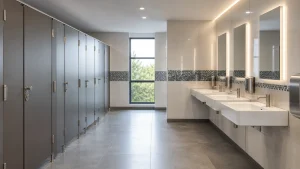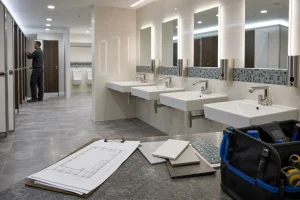
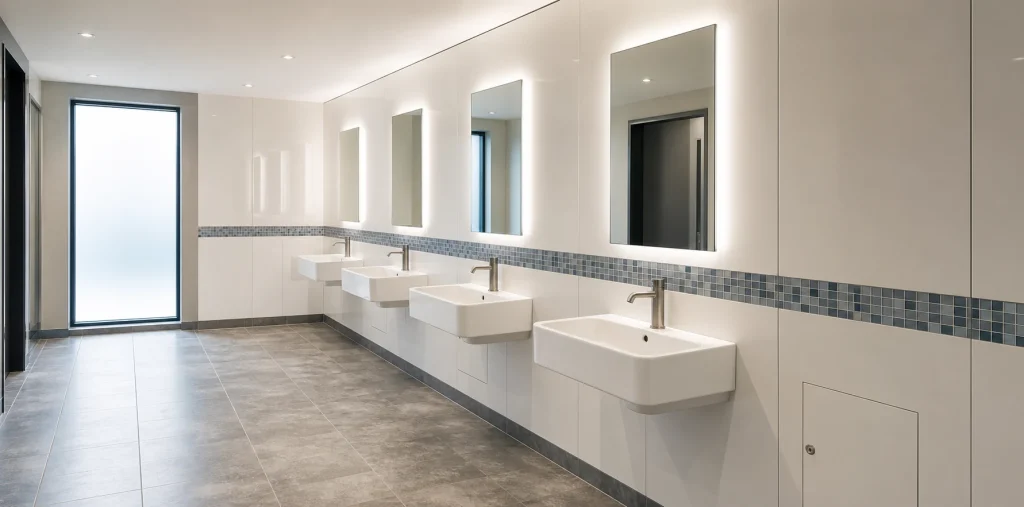
Good washroom design is not only about how the finished space looks on day one. It is also about how easy that space is to inspect, repair and look after once it is in daily use.
That is where IPS duct panels matter. By keeping concealed services accessible, they help facilities teams deal with routine checks, small issues and future servicing without unnecessary disruption to the wider washroom.
What IPS duct panels do in a commercial washroom
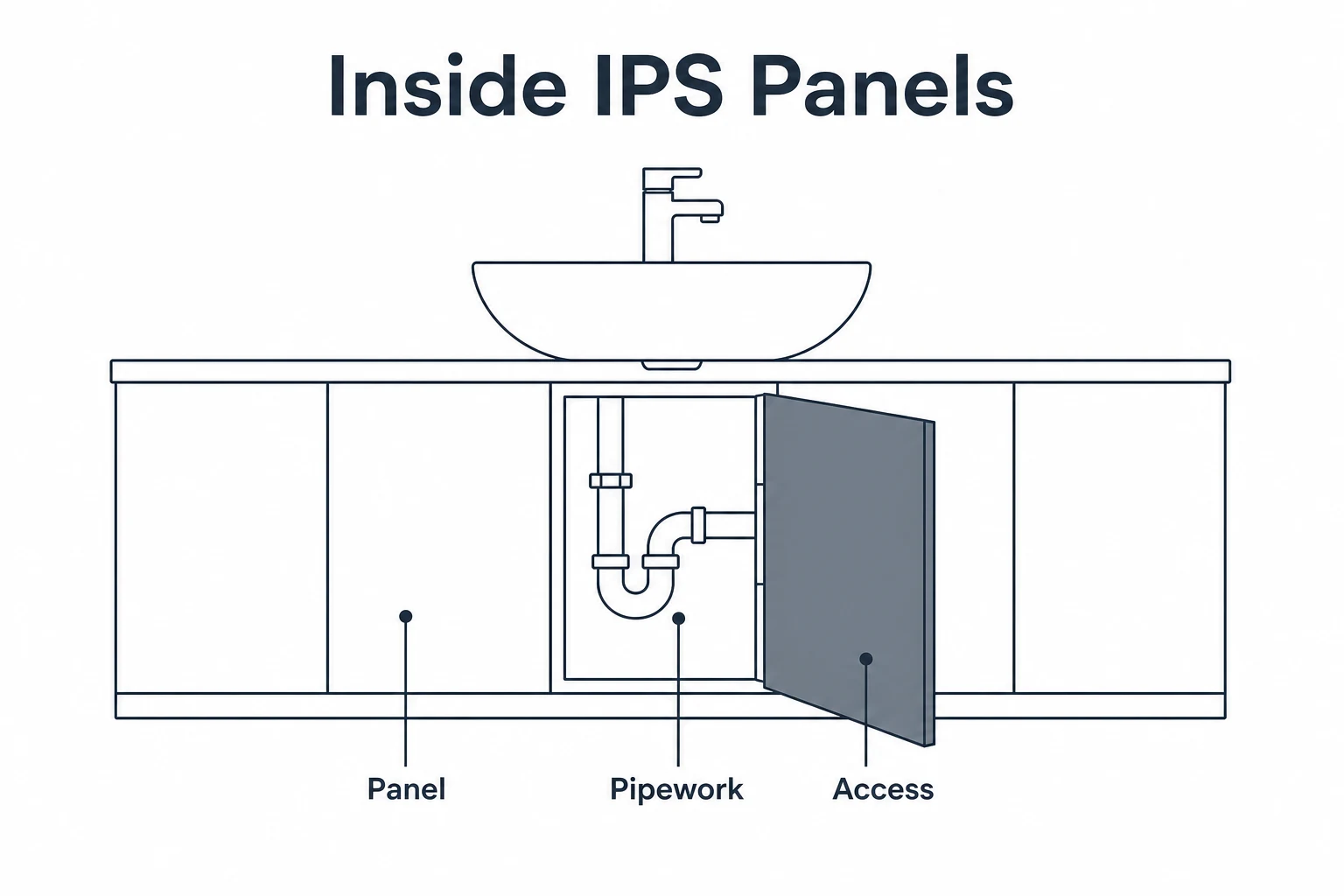
IPS stands for integrated plumbing system. In a commercial washroom, an IPS duct panel system is used to conceal pipework, valves, cisterns and other services behind a neat panel face, while still allowing access when it is needed.
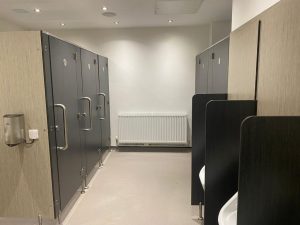
The panels usually sit behind toilets, urinals, basins or other sanitaryware. Instead of leaving pipes exposed, the system creates a clean finish and protects services from accidental damage. At the same time, removable or accessible panels mean engineers can get behind the surface without dismantling large areas of the washroom.
This balance is important. A commercial washroom has to feel tidy and robust for users, but it also has to work for the people responsible for keeping it operational. Well planned IPS duct panelling gives both groups what they need.
For facilities teams, the practical value is simple. If a valve needs checking, a cistern needs inspection or pipework needs investigation, access is built into the design from the beginning. That can make the difference between a straightforward service visit and a more disruptive piece of work.
Why access matters after installation
Once a washroom is handed over, it becomes part of a working building. It may be used by staff, visitors, customers, pupils, residents or the public, depending on the setting. In any busy environment, small faults can appear over time, even when the installation itself is high quality.
Accessible IPS panels make it easier to respond sensibly. A facilities manager or approved contractor can inspect the concealed area, identify what is happening and decide the right next step. That might mean checking an isolation valve, looking for signs of a leak, inspecting a flush mechanism or confirming that pipework is secure.
Without proper access, even a simple check can become awkward. The team may need to remove fixed finishes or work around limited access points. That is rarely ideal in a washroom that needs to remain usable. IPS panels reduce that problem because servicing has been considered as part of the original washroom design.
This is one reason aftercare should not be treated as something separate from specification. Good commercial washroom aftercare is easier when the building fabric already supports inspection and maintenance. The more thought that goes into access at installation stage, the easier it is to protect the washroom over time.
How IPS panels help isolate issues quickly
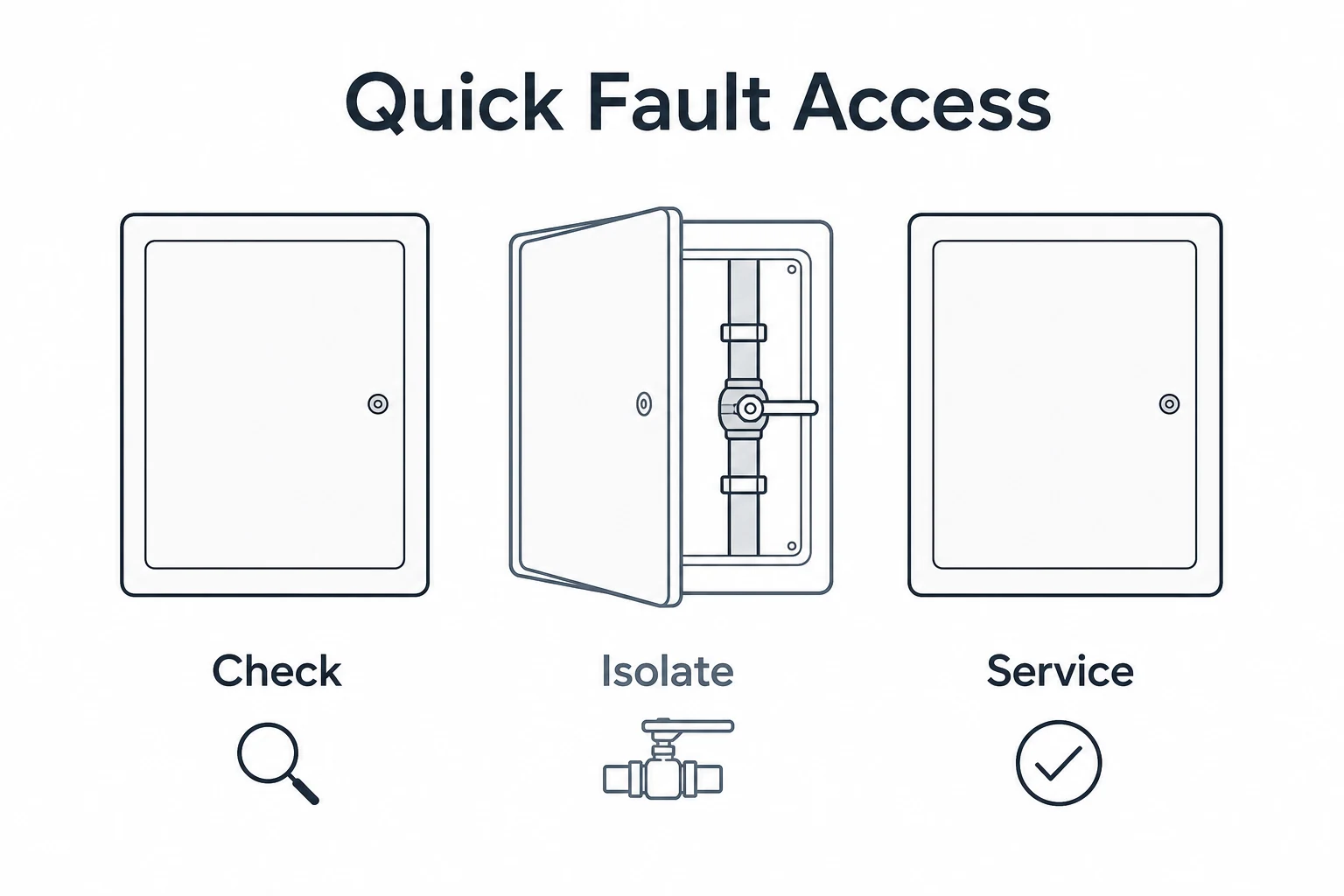
One of the main benefits of IPS duct panels is that they help teams narrow down problems. If a washroom user reports a leak, poor flushing, slow filling or an unusual sound, the concealed services can often be inspected through the relevant access panel.
That targeted access helps avoid unnecessary disturbance. Instead of opening up a broad area, the engineer can focus on the section linked to the fixture or service in question. This is especially useful in commercial settings where washrooms may need to stay open, or where downtime needs to be kept tightly managed.
Isolation is another important point. Valves and service points are often located inside duct spaces. When those areas are easy to reach, a contractor can isolate a fixture or section more confidently while investigation takes place. That can help prevent a small issue from affecting more of the washroom than necessary.
Accessible panels also support better record keeping. Facilities teams can note which access points relate to which services, making future visits more efficient. Over time, that creates a clearer picture of the washroom and how it is performing.
What to consider when specifying an IPS duct panel system
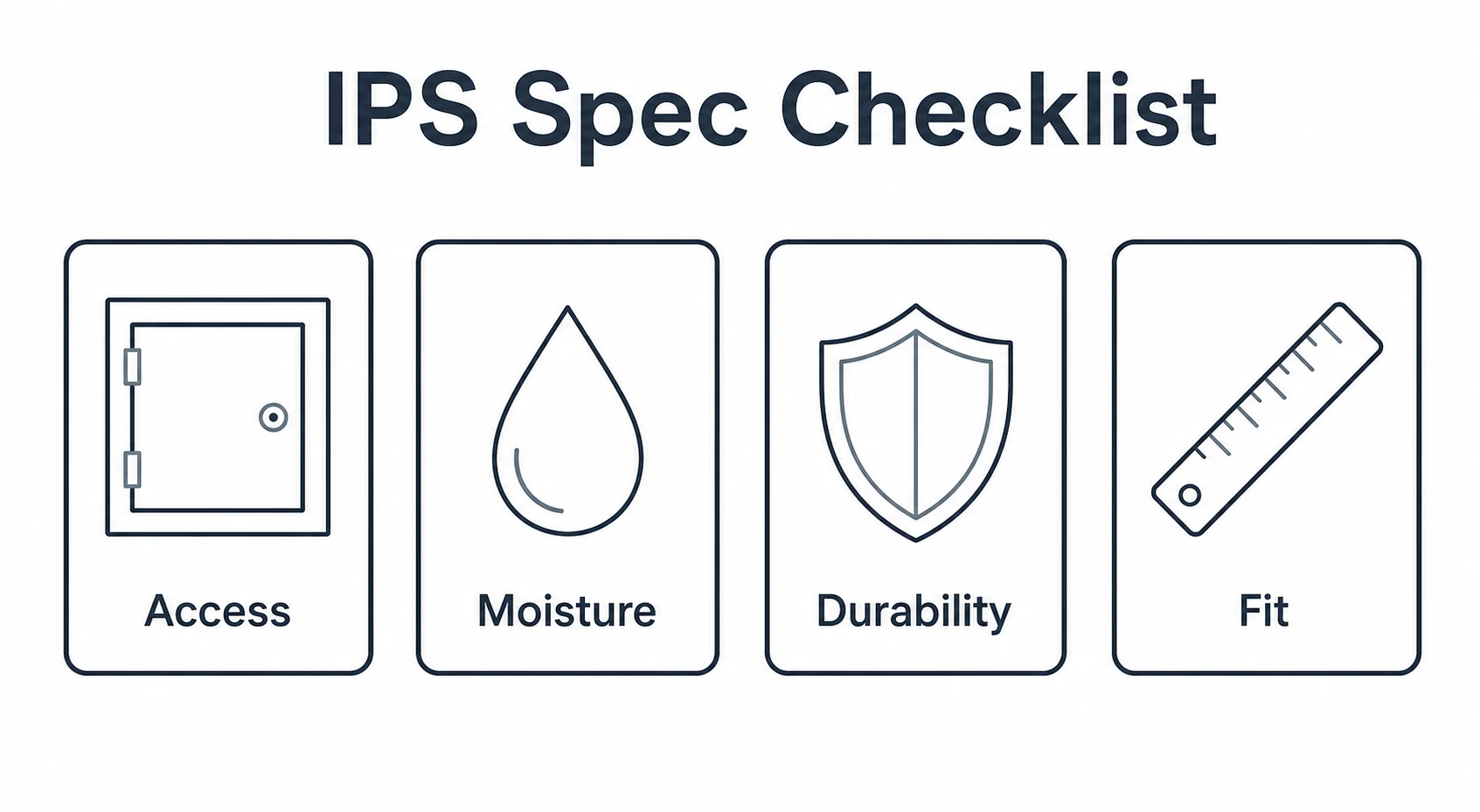
Not all washrooms have the same servicing needs. The right IPS duct panel system depends on the layout, sanitaryware, expected usage, service routes and access requirements. Early planning is therefore essential.
Key considerations include:
- Where valves, cisterns and service connections will be located.
- Which panels need to be removable or lockable.
- How engineers will reach components safely and comfortably.
- Whether access points are obvious to maintenance teams but discreet for users.
- How the panel finish will stand up to regular use and cleaning.
It is also worth thinking about future changes. A washroom may need adjustments later, particularly in commercial buildings where layouts, occupancy or usage patterns can evolve. Accessible duct panels give the space more flexibility because key services are not trapped behind fixed finishes.
Coordination between designers, installers and facilities teams is valuable here. The people who will look after the washroom can often highlight practical access needs before installation begins. That input can prevent avoidable frustrations later.
The link between IPS panels and ongoing washroom maintenance
IPS panels are not a substitute for a good maintenance routine, but they make that routine easier to carry out. Routine inspections, planned servicing and prompt fault finding all benefit from sensible access.
For example, a maintenance schedule may include checking flush controls, looking for early signs of leaks, confirming fixings remain secure and ensuring water related components are performing as expected. If those checks involve concealed services, accessible panels help keep the process organised.
They also support cleaner working. Because services are hidden but reachable, engineers can carry out checks without exposing more of the washroom than necessary. This helps preserve the finished appearance and reduces the chance of incidental damage during inspection.
For a broader view of practical washroom upkeep, Ask Washrooms has also covered how to maintain commercial restroom facilities. IPS access is one part of that wider picture, alongside cleaning routines, responsive repairs and planned checks.
How better access supports a longer service life
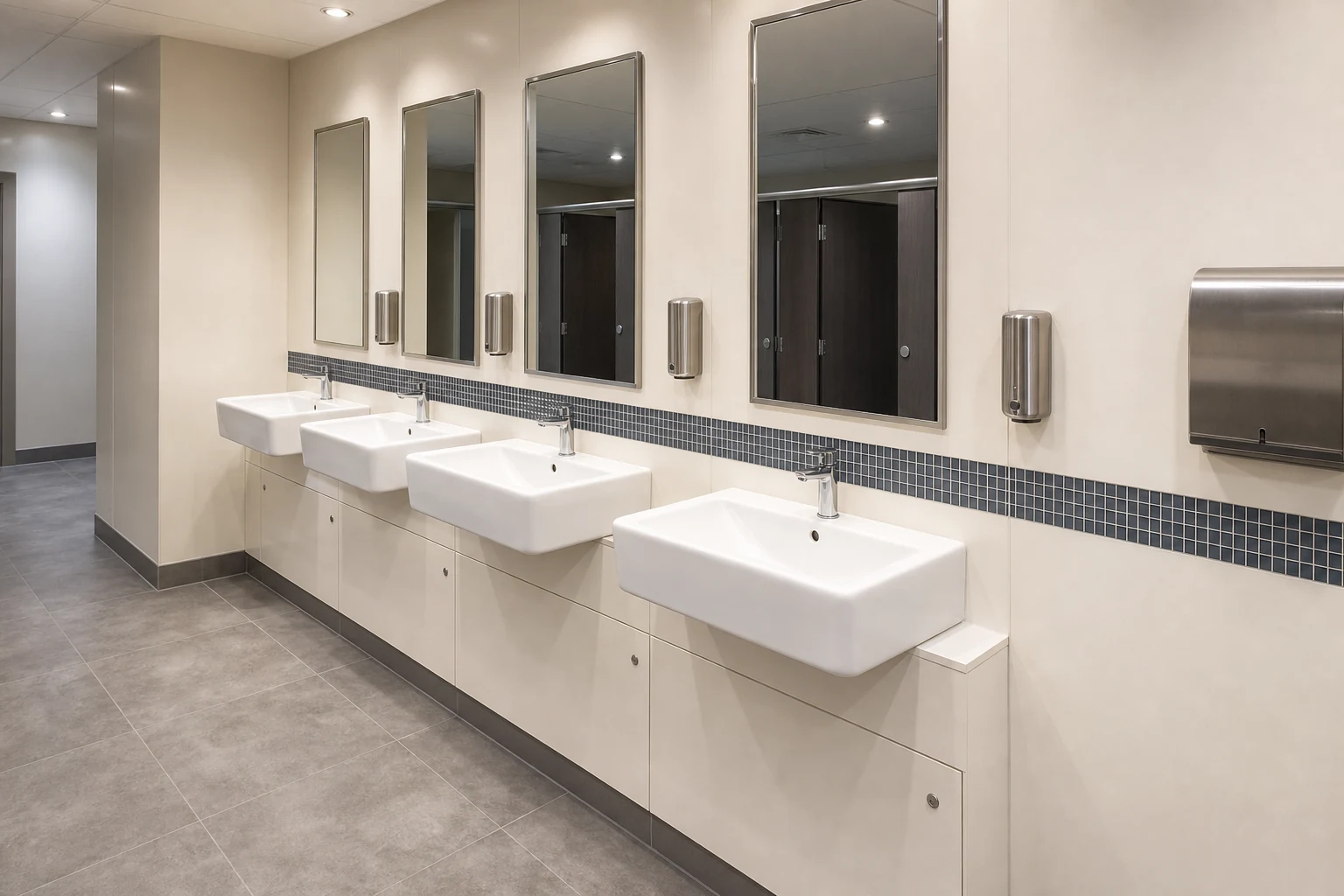
A commercial washroom is a working asset. The longer it remains easy to inspect, service and adapt, the more value it can deliver for the building. IPS duct panels support that by making hidden systems reachable throughout the washroom life cycle.
Early access to concealed areas can help teams spot issues before they develop further. It can also make future replacement of parts more straightforward, because the service route has not been permanently sealed away. Over time, that can help preserve both the function and finish of the washroom.
Good access also encourages better maintenance habits. When checks are simple to carry out, they are easier to include in planned routines. When panels are awkward, unclear or poorly positioned, teams may have to spend more time simply reaching the part they need to inspect.
The best commercial washroom services look beyond installation alone. They consider how the space will be used, cleaned, inspected and serviced in the years ahead. IPS duct panels are a practical example of that thinking in action.
- IPS duct panels conceal services while keeping pipework, valves and components accessible.
- Good access helps facilities teams inspect issues quickly and reduce unnecessary disruption.
- Planning panel positions early makes aftercare and future servicing more straightforward.
- Accessible duct panels support cleaner working, better records and more confident fault finding.
Frequently asked questions
What does IPS mean in washroom design?
IPS means integrated plumbing system. It is a panel based system used to conceal washroom services such as pipework, valves and cisterns while still allowing access for inspection and servicing.
Are IPS duct panels only useful during installation?
No. They are valuable throughout the life of the washroom because they give facilities teams and contractors practical access to concealed services after the installation is complete.
Can IPS panels help with leaks?
They can help teams investigate leaks more efficiently. Accessible panels allow an engineer to inspect the relevant duct space, check fittings and isolate services where suitable.
Should facilities teams be involved when IPS panels are specified?
Yes, where possible. Facilities teams understand how the washroom will be maintained in practice, so their input can help ensure access points are positioned sensibly.
Planning washrooms with aftercare in mind
If you are planning a commercial washroom project, Ask Washrooms can help you think through both the finished space and the practical servicing needs behind it.